

Dissipative Structures, Order, and Latent Entropy are all necessary consequences of a sovereign Second Law.
The Second Law is unfinished business, if order/latent entropy is as fundamental as entropy.
Complexity Science explained in few words is “the study of order”. This paper will overview two previous complexity scientists, where they stopped short, and why Second Law Ontology is both necessary and explains more with fewer axioms.
Dissipative Structures (Ilya Prigogrine)
A dissipative structure is a stable, self-maintaining pattern that exists only while it irreversibly dissipates energy, sustained by continuous throughput far from thermodynamic equilibrium.
Ilya Prigogrine, a complexity scientist, made the first major orthogonal move to say order can emerge from flux; that irreversibility, time, and entropy must be real.
Described symmetry breaking, a core theme of the Second Law, to describe order formation.
A vortex choosing to turn CW or CCW, D-Glucose being chosen over L-Glucose. The Second Law has the authority to break symmetry in order to increase dissipation.
Entropy bookkeeping remained classical (scalar production), with no internal accounting for constrained or latent degrees of freedom. Entropy thinking limited to “heat”; No entropy accounting for order; If order is real, how does the Second Law stay sovereign?
Prigogine identified when and where order appears, but not a universal, geometry-first mechanism by which entropy selects specific higher-dimensional modes. Second Law Ontology proposes dissipative structures form wherever flux occurs under geometric constraint; And there is always a constraint whether fields, gravity, or spacetime itself
Dissipative structures were described originally as an exceptional phenomenon; Second Law Ontology says order is the default outcome of dissipation under constraint; from a degenerate mode of vibration, to life; to Earth’s climate system
Stayed phenomenological and descriptive, Second Law Ontology gives rigorous axioms, gives mechanism, makes strong falsifiable predictions, says “no” to existing questions (falsifiably) with less axioms
There is no stronger “no” in science than a law-2 violation
Law of Increasing Functional Information/Stuart Kaufman
IF=−log2(Nfunctional(E)/NTotal)
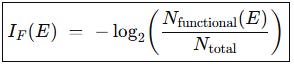
Counts the ratio of functional configurations that achieve some thereshold level of function E, relative to the total configurations of the system
This theory echoes a lot of assertions of Second Law Ontology, but does it with more baggage, not well defined axioms
Functional Information embodiments “ratchet” themselves up over time, so it says irreversibility is essential without saying it
Stuart Kaufman’s functional systems “exploring the adjacent possible” suggests systems do not need to explore all possibilities, suggesting non-ergodicity. Non-ergodicity means ordered systems don’t explore every state within a fixed phase space. Second Law Ontology goes beyond non-ergodicity, and asserts phase space expansion is real, as are constraints on phase space under flux. Second Law Ontology asserts entropy growth alone is enough to drive the evolution of the universe.
But has many flaws:
Can’t describe rigorously what a function is; In its paper, functions such as homeostasis, novelty, replication all link back to dissipation of free energy; Suggests information is sovereign but all roads lead back to flux;
It’s a descriptive theory only, it makes no assertions on the big questions in science today that are necessary given its axioms, and it does not put itself at risk of falsification
Not a hard Popperian theory, does not specify forbidden processes or impossible transitions, making it difficult to derive sharp falsifiable constraints; relies on flexible definitions of function and success, allowing reinterpretation across domains after the fact.
No accounting for loss of phase space; LIFI counts successful configurations but has no mechanism to account for permanently lost or suppressed degrees of freedom; Second Law Ontology does (latent entropy)
Second Law Ontology was founded because the Second Law as canonically understood is unfinished business, once this is set straight order becomes as fundamental as entropy, and explains this phenomenon with less baggage and greater clarity
Flux Under Constraint Creates Modes
A mode is a metastable bundle of degrees of freedom (DOF) that appears discretely when a flux–constraint threshold is crossed, forming a coherent dynamical unit that persists only while dissipation maintains the required conditions.
Examples:
convection cell
vibrational normal mode in a solid
plasma instability mode
biological metabolic loop
galactic spiral density wave
human voice
PV-mode in a gas
mass/matter
atomic vibrational modes(heat)
Modes are formed from attractors in thermodynamics. An attractor put simply is a “diode but for entropy”; it is the set of geometric constraints that forces entropy to compute itself into novel orderly configurations, many of which can be coupled to in order to capture potential energy/work
Modes increase in dimensionality and complexity naturally by continued flux under constraint; life explodes in complexity because it “intentionally” gates energy, allowing novel ways of dissipating energy over time
dS = §Qrev / T
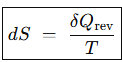
Using Clasius entropy relation; we can interpret temperature, as the energy cost to activate a marginal DOF. One can interpret each mode (thermal/non-thermal) as having their own temperature that tends towards equilibrium in temperature to other modes in an isolated system sharing the same gradient. Physics already describes other non-thermal modes as having temperature including, radiation temperature, Spin Temperature, Effective Temperature in Turbulunce, Phonon Temperature in Solids, Electron temperature(plasma), Hawking Temperature. Negative Temperature, used in lasers, makes more sense this way, as adding energy reduces accessible DOF.
Tmode = dEmode / dSmode
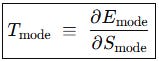
Generalized Temperature for a Mode
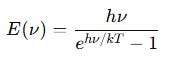
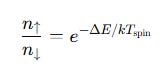
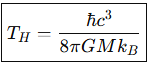
When it becomes too expensive to increase entropy in existing modes; new modes open autonomously and non-linearly
In human vocalization, for example, air is pushed through a narrow opening. Above a certain threshold of flux(pressure), the heat and turbulence channels saturate, and for flux to continue entropy activates sound. Sound is a higher dimensional order with energy occupying smaller phase space. Traditional physics struggles to model voice because it is using reversible tools; claims eigenmodes of vibration were just there and tries to model its thresholded nature with curve fitted exponential functions of pressure;
As an experiment, try activating your voice at arbitarily low pressure flux, you should find you can whisper only as only thermal and turbulent modes are active. Above a certain pressure flux, you should find your voice activates, as the attractor (voice box) makes this mode the cheapest way of transporting energy to increase entropy.
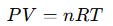
PV/mode in a gas, PV = nRT, ideal gas law is a reversible approximation of a fundamentally irreversible thermodynamic regime change. For example the “PV mode” is simply activated when it becomes cheaper to increase entropy in another mode (Pressure-Volume mode) when it becomes too expensive/ disfavored to increase entropy solely in molecular thermal modes, above the threshold(boiling point). The fundamental phases of matter are not fundamental to the Second Law; they are emergent regimes activated autonomously by entropy and energy flux. The reversible math of phase change is complicated by renormalization tricks, and is fragile in describing a fundamentally irreversible and thresholded phenomena. The ideal gas law remains valid as description within a mode, but cannot describe the irreversible transition.
PV = nRT
Energy is a rival good, and energy in one mode means it is not usable in another mode. Modes in this sense “compete” for energy for what can increase entropy/serve the Second Law the best at the moment. If the Second Law has to create order to maximize flux, it will do so.
Modes vanish discontinuously when sustaining flux drops below threshold, collapsing their bundled DOF back into lower-dimensional channels.
Thermal temperature is already technically a vector, what we call temperature is an average of all the distinct atomic modes. So thermal temperature already embodies this behavior, as the thermal temperature vector can change dimensionality autonomously, at thresholds not necessarily at phase change.
Modes form a hierarchy across timescales, with slower, higher-dimensional modes embedding and constraining faster ones.
Mode creation and annihilation cannot be generated by unitary or reversible evolution, as they change the dimensionality of accessible phase space.
Higher Dimensional Orders
Modes can be created and cascade hierarchally over time, as long as constraints remain and there is gradient to dissipate.
A prime example is water, a dissipative structure monster, creates hundreds of novel modes across micro, meso and macro scale, and is responsible for Earth’s dynamic climate
Examples:
Hydrogen-bond network modes (micro)
Librational modes — Restricted rotational oscillations of water molecules (micro)
Convection cells — Appear abruptly at critical Rayleigh number(meso)
Turbulent eddies and vortices in fluids-(meso)
Ocean circulation modes-(macro)
Climate oscillation modes/ENSO-(macro)
Water has among the lowest thermal diffusivity of known materials, and among the highest thermal capacity, because it likes to share energy from atomic thermal modes to other micro modes. Water likes to create cascading modes of high dimensionality while raising thermal temperature.
Energy is a rival good to all these modes, so all these modes competing for energy contribute to the remarkable temperature stability of Earth in short and long term.
A byproduct of water’s macro modes is nutrient cycling, which is the foundation for yet another dissipative structure cascade, life on Earth.
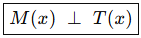
These higher orders can not be tracked or computed by some Lagragian of a temperature field T(x), new modes are new effective variables algebraically, like new effective axes geometrically, but these are actually higher dimensional orders in a combinatorial representation theory sense; these new modes are orthogonal to T(x), they activate when it is too expensive to increase entropy in lower dimensional modes
The failure is not computational but ontological; the state space does not close under the original variables. New modes expand phase space. They are not functions on the original phase space. No finite Lagrangian over initial DOF can anticipate them
Life is also a dissipative structure monster, sitting on top of water macro modes and chemical thermodynamic cycles that enables it.
Second Law Ontology suggests life is just a mode activated when the conditions are right, it is a solution to a thermodynamic problem, found not by exploring entire state space ergodically, not cosmically “random”
If this is true, life is much more common in the universe than previously suspected; Life is thermodynamically favored given sufficient flux, existing liquid water, and chemical richness.
M(x) orthogonal to T(x)
“Entropy is Observer Dependent” Argument is Weak When Order is Well Defined
It is a common view among physicists today that entropy is observer dependent; That entropy is a measure of ignorance of the system; That the Second Law is statistical only, emergent; That reversible laws are the real core reality.
I will give a clean argument why this argument falls apart, not because physicists that believe this are ignorant; but it is the addition of the axiom of “Order is Real” that is absent in physics. This paper has explained that “Order is Real” is a plausible justified axiom of physics in previous sections.
Schain = DOFrealized + DOFlatent

Axioms to be used for the argument are: 1)Entropy is Real 2)Order is Real 3)The Second Law is Sovereign
1) Order and entropy are defined in the same terms
(accessible degrees of freedom / phase space / constraints).2) If entropy is observer-dependent, then order must also be observer-dependent, because order is just entropy with constraints.
3) Therefore, if entropy is observer-dependent, there must exist some frame of reference in which: a depleted battery has usable potential energy, burned gasoline is a high-free-energy state, or objects fall upward
4) No such frame exists. To give a counterexample is to give a Law-2 violation.
5) Therefore, the assumption “entropy is observer-dependent” leads to contradiction.
6) Hence, entropy is ontic (real, objective), not epistemic, not observer dependent.
What is the Difference Potential Energy, Order, and Latent Entropy Really?
Up until now, these terms were used interchangeably, but now they will be given a rigorous definition.
Potential energy is the most familiar term to physics, and is the useful energy in the form of useful work (Energy in 1 DOF implied) that can be extracted from the environment.
Notably, potential energy is frame of reference dependent, you need a frame of higher potential and lower potential to calculate potential energy.
Potential energy is a subset of Latent Entropy. Latent Entropy are the DOF that are not currently expressed because energy is currently occupying fewer degrees of freedom than it would from the ground state/vacuum state/0-point state.
As such, latent entropy does not require a frame of reference to evaluate. Latent entropy is tracked by the universe, or else entropy could actually decrease, and the Second Law would not be truly sovereign.
Latent entropy is a real term needed and introduced by Second Law Ontology, if order is as real as entropy, that is lacking in traditional physics vernacular.
Chain Entropy is the only entropy currently robust enough to include heat, turbulence, gravitational entropy, 0-point vacuum entropy(realized), and all in between forms of entropy all in one definition.
Second Law Ontology posits that the bookkeeping mechanism the Second Law uses to say sovereign must be gravity, and that classical GR is making a category error by not including the true mechanism of gravity. This is not speculation, this follows as an ontological necessity if entropy and order are both taken as real, and the Second Law is truly sovereign. This requires LE-GR (Latent Entropy General Relativity)
Order is a phenomenological term used by scientists, and does not have a particularly rigorous meaning. For all intents and purposes, order = latent entropy according Second Law Ontology.
Why “Second Law is Sovereign” as Axiom
Second Law Ontology argues that the Second Law is the most fundamental law of the universe; And most of the greatest questions of civilization rest on whether the Second Law is sovereign or not. And only Second Law Ontology is capable of making falsifiable claims on the greatest civilizational questions, these claims necessarily follow from its axiom.
Examples:
1) Is creativity and novelty real?
2) Is life random, a miracle, or ordained?
3) Is the universe on a mission?
4) Is determinism real?
5) Is infinite growth and expansion possible?
6) Will AI automate everything because everything is reversible?
7) Is free will real? Or even necessary to make the Second Law sovereign?
8) Is nuclear fusion as a Law-2 machine aligned with the Second Law?
9) Are AI mathematicians possible? Or is it a law-2 violation?
10) Can this universe be a simulation? Or is that a law-2 violation?
11) Is stellar or galactic scale energy possible?
12) Why is this civilization struggling with the energy transition from fossil fuel?
Macroscopic laws inside and outside of physics derive from the Second Law if looked at truly. The Second Law unifies every science into one subject.
1)No computation without dissipation (Landauer’s Limit) (Comp Science)
2)All economic activity is a dissipation of energy. (Economics)
3)Hard cardio brings an order that is unsubstitutable. Order emerges from dissipation, pure Second Law. Order is your payment for serving the Second Law. (Biology)
In summary:
Even in myth and religions across the world, arguably all were looking for the Second Law all along.
The same force responsible for death, decay and extinction, brings creativity, novelty, and new species.
All this supports using “Second Law is sovereign” as an axiom. Axioms are not proven, they are chosen because they align by what people intuitively experience. This is simply the argument in favor of using the Second Law is sovereign above all other axioms, including unitarity and reversibility in physics.
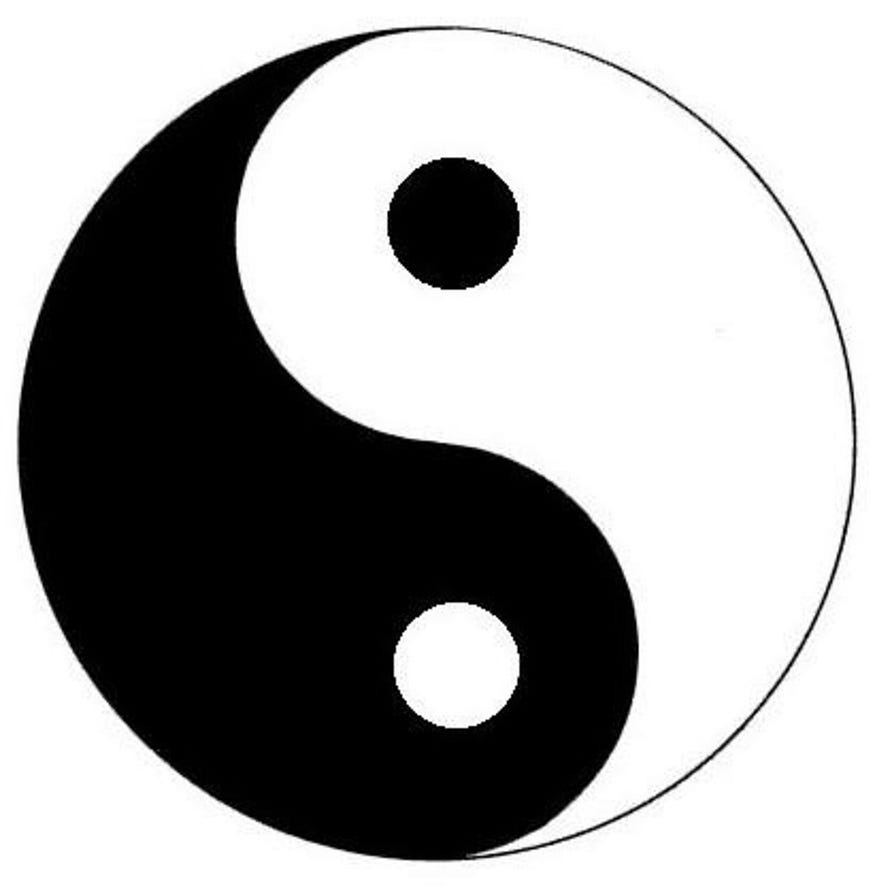
Yin Yang myth, arguably the most on point myth capturing the ethos of the Second Law.